Oh Comely CSP (media language, representation, industry & audience)
MAGAZINE
Narrative, Genre and Audience
Masthead = name of
the magazine
Strap line = line to
give more information about magazine
Cover lines = main
articles included in magazine
Lead article = main
article in magazine
Puff = promotion
that adds value to magazine
Left third = prime
space of a magazine front cover
Primary image = main
image
Oh Comely (CSP) – media industries, audience,
language & representation
-very minimal compared with others e.g. Hello magazine
-large, bold masthead to capture reader’s attention at first
-primary image positioned in centre of page – main focus of
attention
-all backgrounds are fairly bright - positive connotations
-text is much smaller than masthead– have to pay more
attention if you want to view the text
-all women between 20-30 (young)
-multicultural women
-all covered up/ not exposing bodies – not stereotypical
women/ outfits in fitness etc.
-all little/ no makeup – keep a real impression of women not
an idolized representation
-minimal aesthetic – not the prettiest/ model material/
idolized women
-enigma codes - mysterious, other meanings, unknown


NARRATIVE
Todorov's narrative theory:
 -found that narratives moved forward in chronological order with one action following after another (clear beginning, middle & end)
-suggested characters in narrative would be changed in some way through the course of the story & would be obvious by resolution.
-this traditional story arc format is known as a linear narrative:
1. Narrative starts with equilibrium
2. Action/ character disrupts equilibrium
3. Quest to restore equilibrium begins
 4. Narrative continues to a climax
5. Resolution occurs & equilibrium is restored
'Oh Comely' analysis of narrative of front cover
-empowerment of women
-strive for individuality/ freedom/ independence of women - link to context - women rights - Emiline Pankhurst
-causal/ relaxed pose/ posture - suggest relation/ careless/ calm/ unfazed - positioned like this - reclined? or put i this position - reason? link to her as a person? her
-serious facial expression - very serous about making change for women - distort society's views in women and how they are typically portrayed
-trying to sell a lifestyle which is abstract concept - not something you an physically hold onto - something you can inspire to be/ adopt
-'hard-won wisdom'
-women often traditionally perceived as feminine/ model material/ secy/ makeup/ fashion
-jacket - masculine - khaki camo, military - embodies
-jewellery - still feminine without presenting her in an ultimately feminine way
-juxtaposition/ contrast - jacket and jewellery (feminine)
-wearing barely any ,makeup
-unflattering pose, looking down on us as readers - reflects power
-hair tied up - causal, practical style
-trying to capture reader to relate to their lifestyle and attempt to improve aspect of their life whether that's wit confidence, meditation/ staying calm/ controlling other elements of your mind
-creates enigma and anticipation for the reader - reader to be fulfilled by reading on - facial expression could demonstrate various messages by the tone on her face
-primary image- minimalistic/ vague - unaware of who she is or what she is trying to present, influence or
-roll neck top - covers body/ skin - old fashioned views in society - historical - women not supposed to reveal their skin or body parts - disrespect, offend particular religion/ religious figures & views
-cryptic/. enigmatic/ mysterious - 3 phrases are quite simple - not that meaningful as we don't know what it related to and whose trying to say them
-binary opposites - feminine vs masculinity - jewellery & purple colour in jacket compared to the military jacket, barely any makeup/ natural faced & nails and hair style - represent females as slightly more masculine compared with the typical idolized representation of women
-blurry/ unfocused background - could suggest the unimportance of what's happening around her
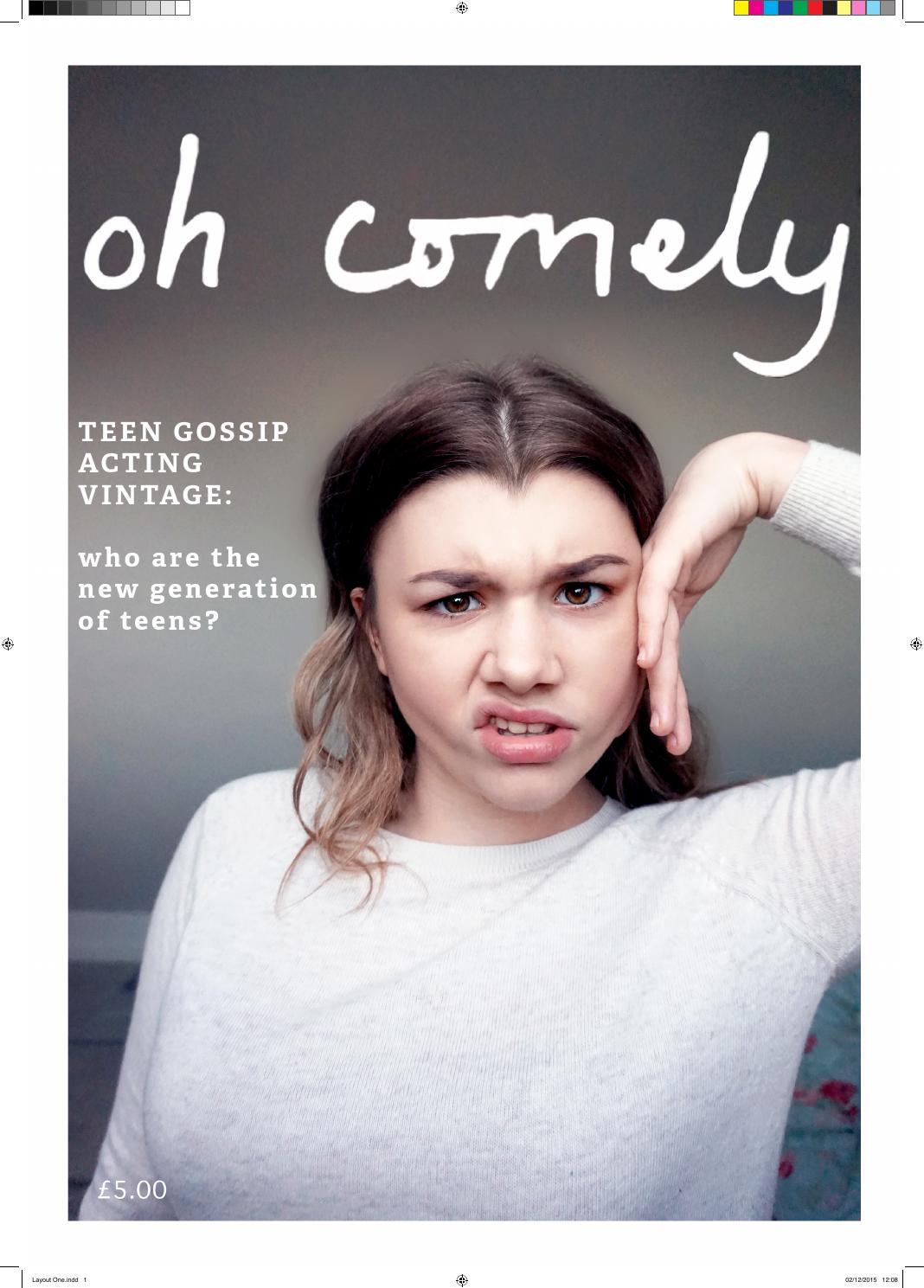 ANALYSIS OF COVER
-handwritten, bold style font - sans serif, informal
-dark to light background - ombre
-barely any text / only 1 cover line - left of primary image - tells us what this edition is focusing on
-unusual facial expression - enigma - not a causal expression - told to pull face? -curiosity/ confusion/ disturbed
-dull background - like a painted wall - boring background - could demonstrate how shes trying to get message across to young teen readers that are often from typical feminine/ trend setting backgrounds like schools where most girls just want to fit in by following the trends - homely, conformable environment - grey colour - metaphor for adolescence
-"who are the new generation of teens?"
-"who" - direct address with the reader - make them feel more included/ involved
-price - not main focus of magazine - doesn't put off audience as much, implies the audience have disposable income - luxurious/ wealthier feel to magazine - only released 6 times per year - often more specialised content
-dull colour pallet- neutrals/ grey/ similar to vintage style - main focus of cover is primary image - centre of page
-binary opposition - white image vs dark background colour scheme, light vs dark - high and lows emotions - presented through structure and format of cover
-minimal makeup - different/ more masculine approach, not as feminine as typical feminine magazine e.g. teen vogue
-"TEEN GOSSIP ACTING VINTAGE" - informs reader on topics included in magazine issue
-pose casual - quirky, direct address, exasperation/ what are you doing?? - not the most flattering pose - cut arm out - unconventional - compared with other magazine covers that are very bright sand colourful, like a expression you would pull to yourself in mirror e.g teen vogue
Compare the specific choices that have been made in the representation of gender in your products. in your answer, you must consider:
* how gender is represented through processes of selection and combination
* reasons for choices made in presentation of gender
* similarities and differences in representation of gender
* how far these representation are influenced by historical, social and political contexts of media

Men's Health
- title fills width of magazine – stands out/ bold, main text focus
- blue, black and white colour scheme - appeal to male audience - dominant colours for males - attract similar types of audience who want to improve their fitness quickly, blue typography – stereotypical colour for males – beneficial to the mind and body, slows human metabolism and produces a calming effect. Blue is strongly associated with tranquillity and calmness, quite a bright colour – attract our attention further, archetypical male colour - features heavily along with binary opposition – classy easy to read la-blue typography – stereotypical colour for males – beneficial to the mind and body, slows human metabolism and produces a calming effect. Blue is strongly associated with tranquillity and calmness, quite a bright colour – attract our attention further, archetypical male colour - features heavily along with binary opposition – classy easy to read layout
- body builder, alpha male - famous celebrity Vin Deasel - already famous/ A list actor - more likely to show interest in reading magazine - Starr theory
- Multi-cultural magazine - person of colour - inclusive
- expectations of contemporary and traditional masculinity, the study of Men’s Health is linked to social & cultural contexts through reference to body image & changes in what society believes acceptable and
- Emphasis on male beauty & grooming links to some conventions of traditional stereotypes of masculinity (lots of muscle/ six-pack/ built up, tall & attractive looking/ jawline intense etc.
- Images presented refer to typical masculinity concepts & as a gender performance – men just want to show themselves off (if as a heroic model by
- Muscles seem to be tight with t-shirt (t-shirt arms) – more visible to audience, exaggerate his strength/ power
- Arms clearly visible – attract males/ females – audience attracted may feel uncomfortable & have low self-esteem due to this idealistic image portrayed – lead to mental health issues I young people as they don’t understand as much about how you shouldn’t believe that
- this image is unrealistic and what you should compare yourself to and look like (pressure from social media doesn’t help!)
- Position he’s standing – confident, egotistical, want attention drawn towards him (attract certain audience – male/female) & make sure audience know how strong/ significant he is (feature of typical males portrayed in media texts) - hero shot
- links to Hall’s reception theory – magazine encoded then decoded by audience, audience decode/ interpret text/ information in different ways & encode/ message given, dominant reading – life will be better if you buy the magazine, negotiated reading – encourages people to exercise & highlights importance of a healthy lifestyle, oppositional reading – may not like celeb on front cover – put you off from buying it
- use of # could appeal to younger audiences as they are more familiar with the social media language than older audiences may be
- mode of address – Vin Diesel eye level shot (staring right at us), could allow audience to feel included/ involved with topic
- front cover has enigma(mystery) as if audience start going to the gym and working out significantly then they will see their own end results
- Neale’s theory of repetition and difference – usual layout/ structure of Men’s health magazine but model is different in each which maintains audience’s interest/ attention to reading them
- range of simplistic fonts used – easy to read but still capture audience
- buzz words – main feature of article – attract attention (e.g. exclusive, free, plus) – “New Year muscle” used with exclamation to exaggerate the possible use of working out to achieve muscles
- Men are purpose of a homosexual/ heterosexual gaze (Mulvey’s Male Gaze theory)
- hero shot of Vin Diesel – action foregrounded in image – high key lighting draws attention to his biceps – dominant cultural ideology
- clockwise order of reading stories- dominant - focus audience’s attention on image as it’s centrally positioned – hero shot
- serious face- gym is a chance to gain muscle/ lose weight & exercise – feel better about yourself – encourage young people to go to gym - intimidating - direct address
-Todorov’s narrative theory – text portrays the story of steps to achieve muscles like these(equilibrium), audience reads text and realise they can achieve this too (realisation), start going to gym but realise image is very unrealistic and could cause mental/ physical health issues if audience are inexperienced in gym (disruption, restored order), image at front is the end goal (new equilibrium)
- binary opposition – sparse, clean image - hero – Hollywood values
- hypodermic needle theory – passive audience response which generates an outcome – issues with body image
- numbers in bold font – hybrid style – equation – puffs surrounding image on front cover in sans serif - phone app – serif font (formal, classy, serious, sparse) – health – shows length of time mag has been running
- binary opposition – sparse, clean image - hero – Hollywood values
-Propp's character theory - primary image role of hero
-men purpose of homosexual/ heterosexual gaze (Mulvey's male gaze theory)
-images presented- typical masculine concepts & as a gender performance
-men purpose of homosexual/ heterosexual gaze (Mulvey's male gaze theory)
-images presented- typical masculine concepts & as a gender performance
Oh Comely
- large, bold masthead to capture reader’s attention at first - white neutral colour - suggest more
- primary image positioned in centre of page – main focus of attention
- all backgrounds are fairly bright - positive connotations
- text is much smaller than masthead– have to pay more attention if you want to view the text
- all women between 20-30 (young)
- not many multicultural women used - negative - may not be as accepting?
- all covered up/ not exposing bodies – not stereotypical women/ outfits in fitness etc.
- all little/ no makeup – keep a real impression of women not an idolized representation
- minimal aesthetic – not the prettiest/ model material/ idolized women
- enigma codes - mysterious, other meanings, unknown
- historical context: strive for individuality/ freedom/ independence/ empowerment of women - link to context - women rights - Emiline Pankhurst-historical context: going against traditional values of women, haven't placed any stereotypes in Oh Comely compared with older magazines e.g. 1970's magazine which is all typically what women do (home work, beauty back then)
-Hall's reception theory - publisher encodes media texts and produces them for audience who then views/ reads info/ magazine and decodes in different ways depending on the person (dominant - how publisher wants audience to view text, negotiated - accepts some of publishers views but has own views too & oppositional - disagrees/ rejects meanings publisher presents/ opposes dominant/ preferred reading) e.g. in magazine cover: dominant reading: influenced positively and supports messages conveyed/ presented, negotiated: understands reason for publishers of magazine wanting to promote change/ help with. mindfulness etc. and strive to be independent women rather than following all the trends like other lifestyle magazines e.g. Glamour, Closer & Heat
- causal/ relaxed pose/ posture - suggest relation/ careless/ calm/ unfazed - positioned like this - reclined? or put i this position - reason? link to her as a person? her
- serious facial expression - very serious about making change for women - distort society's views in women and how they are typically portrayed
- trying to sell a lifestyle which is abstract concept - not something you an physically hold onto - something you can inspire to be/ adopt
- 'hard-won wisdom'
- women often traditionally perceived as feminine/ model material/ secy/ makeup/ fashion
- jacket - masculine - khaki camo, military - embodies
- jewellery - still feminine without presenting her in an ultimately feminine way
- juxtaposition/ contrast - jacket and jewellery (feminine)
- wearing barely any ,makeup
- unflattering pose, looking down on us as readers - reflects power, not caring about appearance and what people think of them etc.
- hair tied up - causal, practical style
- trying to capture reader to relate to their lifestyle and attempt to improve aspect of their life whether that's wit confidence, meditation/ staying calm/ controlling other elements of your mind
- creates enigma and anticipation for the reader - reader to be fulfilled by reading on - facial expression could demonstrate various messages by the tone on her face
- primary image- minimalistic/ vague - unaware of who she is or what she is trying to present/ influence - no Starr theory involved
- roll neck top - covers body/ skin - old fashioned views in society - historical - women not supposed to reveal their skin or body parts - disrespect, offend particular religion/ religious figures & views
- cryptic/. enigmatic/ mysterious - 3 phrases are quite simple - not that meaningful as we don't know what it related to and whose trying to say them
- binary opposites - feminine vs masculinity - jewellery & purple colour in jacket compared to the military jacket, barely any makeup/ natural faced & nails and hair style - represent females as slightly more masculine compared with the typical idolized representation of women
- blurry/ unfocused background - could suggest the unimportant of what's happening around her
-psycho-graphic - reformers - seeks enlightenment, freedom of restriction, personal growth, anti-materialistic
-Propp's character theory- send you on mission to get knowledge and even become hero once successful - strive for individuality
-more progressive - not enhanced beauty
How do the aims of 'Oh Comely' differ to more mainstream women's magazines like 'closer', 'glamour', 'heat'?
(all lifestyle magazines but Glamour, Heat and Closer contain more gossip)
Oh Comely:
-less focus on appearances/ typical gossip/ celebrities which publishers/ society think the majority of females are into and interested in these topics
-about 'new ways of looking inside ourselves and out at the world' & 'mindfulness' -compared with main cream. magazines that often seem to unintentionally cause mental health issues due to the concepts of 'perfection' and very narrow minded views on appearances, Oh Comely talks about personality and trying to improve mental health and grow asa person, not following and comparing themselves to other models/ celebs/ role m models
-colour schemes: Oh Comely - uses gender neutral colours - prevent stereotypes being formed, prevent sexism/ offensive comments
-focuses on improving mental state/ reduce stress/ improve confidence not about comparing themselves to others and losing weight and improving appearances with makeup/ going to the gym etc.
-being your own individual/ promoting acceptance
-subvert traditional stereotypes
Glamour and Closer:
-encouraging change within appearance/ bodies - promote diets, weight loss, beauty products - they think if audience do these things then they'll become better people
-include traditional/ typical stereotypes of males/ females
-presume audience who read magazines will want to compare themselves and change for the better and be interested in celebrity gossip
-magazine on beauty, style and women's empowerment - follow trends, beauty hacks/ tips, style/ clothes/ brands which is all typically very feminine but does not provide help and advice for 'normal' people who may not want to just be influenced by other people are follow trends/ fashion, but people like audience of 'Oh Comely' who want to b e themselves, spread positivity, focus on mindset and be healthy on the inside, not just be viewed as physically 'fit' on the outside due to the gym
-magazine on beauty, style and women's empowerment - follow trends, beauty hacks/ tips, style/ clothes/ brands which is all typically very feminine but does not provide help and advice for 'normal' people who may not want to just be influenced by other people are follow trends/ fashion, but people like audience of 'Oh Comely' who want to b e themselves, spread positivity, focus on mindset and be healthy on the inside, not just be viewed as physically 'fit' on the outside due to the gym
How do the aims of 'Oh Comely' differ to 'Men's Health'? What are their attitudes to gender stereotypes?
Oh Comely:
-about 'new ways of looking inside ourselves and out at the world' & 'mindfulness' -compared with main cream. magazines that often seem to unintentionally cause mental health issues due to the concepts of 'perfection' and very narrow minded views on appearances, Oh Comely talks about personality and trying to improve mental health and grow asa person, not following and comparing themselves to other models/ celebs/ role models
-focuses on improving mental state/ reduce stress/ improve confidence not about comparing themselves to others and losing weight and improving appearances with makeup/ going to the gym etc.
-being your own individual/ promoting acceptance
-subvert traditional stereotypes - 'normal' people who aren't driven by wanting to fit into the majority of females who are all wanting to be fashionable, wear makeup/ change appearance, follow trends/ icons/ model & celeb footsteps
-demonstrate that females as a gender are as powerful as males - they may be mentally stronger and work on mental health more to become more calm/ stress free/ able to manage stress etc etc - ability to control their own needs and not follow/ copy everyone else in a group allows them to be individuals and do what they want to do/ wear what they want and support who they want etc.
-demonstrate that females as a gender are as powerful as males - they may be mentally stronger and work on mental health more to become more calm/ stress free/ able to manage stress etc etc - ability to control their own needs and not follow/ copy everyone else in a group allows them to be individuals and do what they want to do/ wear what they want and support who they want etc.
Men's Health:
-still stuck in views/ attitudes that are based on traditional stereotypes for males e.g. in late 1900's - males known for just doing their one job and presenting themselves as a strong, dominant, alpha male whereas women were to be housewives, take care of children and work - women thought to be good at multi tasking typically due to history of women and their roles
-magazine for "men's fitness, nutrition, health, sex style, grooming, tech, weight loss and more" - all mainstream topics associated with males - the gender who want to be the dominant, powerful, stronger, physically fit but also attractive -
-packed with celebrity/ famous/ expert advice/ tips/ information/ interviews - assume audience want to be like these figures and so audience will read the magazine to find out how to change/ improve themselves to look more similar to these men
-more focused on changing audience's appearances and mindsets to want to have a narrow minded mindset like all these built/ confident men who only card about what they look like from the surface - don't consider talking about emotion or sensitive topics which would probably be a lot more helpful and interesting for a certain group of people race than just showing off their bodies and how to achieve these unrealistic figures - harming individuals mental health, particularly teenagers who may already be insecure within themselves as their going through puberty and so are experiencing new developments and spoken topics around them that they are unsure if this is the type of person they want to strive towards and become or if it's completely unrealistic and not 'normal' behaviour/ attitudes
-demonstrating that males are the most significant gender still and to maintain this position they must be very fit, take care of their appearance and follow steps of certain celebs/ models - females aren't spoken about within the magazine
-magazine for "men's fitness, nutrition, health, sex style, grooming, tech, weight loss and more" - all mainstream topics associated with males - the gender who want to be the dominant, powerful, stronger, physically fit but also attractive -
-packed with celebrity/ famous/ expert advice/ tips/ information/ interviews - assume audience want to be like these figures and so audience will read the magazine to find out how to change/ improve themselves to look more similar to these men
-more focused on changing audience's appearances and mindsets to want to have a narrow minded mindset like all these built/ confident men who only card about what they look like from the surface - don't consider talking about emotion or sensitive topics which would probably be a lot more helpful and interesting for a certain group of people race than just showing off their bodies and how to achieve these unrealistic figures - harming individuals mental health, particularly teenagers who may already be insecure within themselves as their going through puberty and so are experiencing new developments and spoken topics around them that they are unsure if this is the type of person they want to strive towards and become or if it's completely unrealistic and not 'normal' behaviour/ attitudes
-demonstrating that males are the most significant gender still and to maintain this position they must be very fit, take care of their appearance and follow steps of certain celebs/ models - females aren't spoken about within the magazine
Theories most relevant to Oh Comely:
-Barthe's semiotics codes - hermeneutic enigma, proairetic/ action, symbolic, semantic, referential/ cultural - applied to any sign (image and language)
-Neale's Genre theory - repetition and difference of genre traits e.g. mixed messages or hybrid genre
-Baudrillard - loss of reality, reality vs construction, everything in media is a construction, simulacra become hard to tell apart from reality = hyper reality (simulacrum = copy of something with very little link to reality) - media doesn't present the reality, often just hyper reality
Hall's Reception theory - dominant reading, negotiated reading, oppositional reading - way audience view/ interpret text and way text is presented - lead to different connotations/ representations
-Gautlett's Identity theory - media messages are contradictory and diverse
-Van Zoonen's Feminism theory - patriarchy may be applied to ownership and control of print media, news values and representations of gender
-Barthe's semiotics codes - hermeneutic enigma, proairetic/ action, symbolic, semantic, referential/ cultural - applied to any sign (image and language)
-Neale's Genre theory - repetition and difference of genre traits e.g. mixed messages or hybrid genre
-Baudrillard - loss of reality, reality vs construction, everything in media is a construction, simulacra become hard to tell apart from reality = hyper reality (simulacrum = copy of something with very little link to reality) - media doesn't present the reality, often just hyper reality
Hall's Reception theory - dominant reading, negotiated reading, oppositional reading - way audience view/ interpret text and way text is presented - lead to different connotations/ representations
-Gautlett's Identity theory - media messages are contradictory and diverse
-Van Zoonen's Feminism theory - patriarchy may be applied to ownership and control of print media, news values and representations of gender
 Iceberg Press
-Independent publishing company
-makes 2 magazines: The Simple Things and Oh Comely
-Lisa Sykes - editorial owner of publishing company
-David Parker - highly successful publisher with a record of growing brands and working every avenue and margin in the margin in the business, he published 3 of the largest magazine brands in UK, he believes lots of magazines have given up on their readers but these ones haven't
-role/ value of audience on relation to publications - aims to do things differently - create a new age for magazines and media brands, independent and put reader at heart/ centre of everything they do, 'It's all about the audience', 'chase the work, not the money', 'Compromise isn't out friend', 'We will always make time for ideas', 'We are stronger when we work with others', 'We want good people to work in a good place', 'Every year we will help a cause that matters', 'We believe in a thing called Print'
-when did iceberg take over mag - 2016
-what does press release reveal that adds to your ideas/ notes - how they're happy to take over Oh Comely and how it aligns with their values

Annotating front cover
Narratology
Todorov's Narrative theory:
-equilibrium - what is life like now/ what do they want to change/ start reading magazine to make a change
-disruption - audience realize they have to change their mindset or in physical way
-resolution - learn which approach to take to improve her mind/ physical appearance
-restored order - start improving mental health, learn to accept yourself more
-new equilibrium - become more positively accepting of themselves
-creates enigma and anticipation for the reader - reader to be fulfilled by reading on - facial expression could demonstrate various messages by the tone on her face
-cryptic/ enigmatic/ mysterious - 3 phrases are quite simple - not that meaningful as we don't know what it related to and whose trying to say them
Barthes Engima codes
-hermeneutic/ enigma - phrases on magazine - make audience want to know more - why she wearing what she is, what is she doing? - no makeup and neutral clothes - link to organic
-proairetic/ action
-symbolic
-semantic
-referential/ cultural
Strauss' binary oppositions
-binary opposites - feminine vs masculinity - jewellery & purple colour in jacket compared to the military jacket, barely any makeup/ natural faced & nails and hair style - represent females as slightly more masculine compared with the typical idolized representation of women
-equilibrium - what is life like now/ what do they want to change/ start reading magazine to make a change
-disruption - audience realize they have to change their mindset or in physical way
-resolution - learn which approach to take to improve her mind/ physical appearance
-restored order - start improving mental health, learn to accept yourself more
-new equilibrium - become more positively accepting of themselves
-creates enigma and anticipation for the reader - reader to be fulfilled by reading on - facial expression could demonstrate various messages by the tone on her face
-cryptic/ enigmatic/ mysterious - 3 phrases are quite simple - not that meaningful as we don't know what it related to and whose trying to say them
Barthes Engima codes
-hermeneutic/ enigma - phrases on magazine - make audience want to know more - why she wearing what she is, what is she doing? - no makeup and neutral clothes - link to organic
-proairetic/ action
-symbolic
-semantic
-referential/ cultural
Strauss' binary oppositions
-binary opposites - feminine vs masculinity - jewellery & purple colour in jacket compared to the military jacket, barely any makeup/ natural faced & nails and hair style - represent females as slightly more masculine compared with the typical idolized representation of women
Representation
-blurry/ unfocused - could suggest the unimportance of what's happening around her - focus on self, not environment and surroundings and what everyone else is doing
-juxtaposition/ contrast - jacket and jewellery (feminine)
-empowerment of women
-wearing barely any makeup
-unflattering pose, looking down on us as readers - reflects power, disappointment, doesn't want to be associated with mainstream magazine and their views - unsexualised
-hair tied up - causal, practical style - more realistic
-juxtaposition/ contrast - jacket and jewellery (feminine)
-empowerment of women
-wearing barely any makeup
-unflattering pose, looking down on us as readers - reflects power, disappointment, doesn't want to be associated with mainstream magazine and their views - unsexualised
-hair tied up - causal, practical style - more realistic
-primary image- minimalistic/ vague - unaware of who she is or what she is trying to present, influence - magazine shows that you don't have to be famous to influence audiences, the fact that there are 'normal', more natural females included will hopefully attract some people and make them want to be their own person and focus more on their mental health and being a green person (environment & health)
-strive for individuality/ freedom/ independence of women - link to context - women rights - Emiline Pankhurst
-trying to sell a lifestyle which is abstract concept - not something you an physically hold onto - something you can inspire to be/ adopt
-'hard-won wisdom' - suggest how women have to work so hard to become powerful/ wise/ worthy, not just looked up to straight away like men as they have always been portrayed as the most significant and dominant gender
-women often traditionally perceived as feminine/ model material/ sexy/ makeup/ fashion - subverts these ideas
-trying to capture reader to relate to their lifestyle and attempt to improve aspect of their life whether that's wit confidence, meditation/ staying calm/ controlling other elements of your mind
-strive for individuality/ freedom/ independence of women - link to context - women rights - Emiline Pankhurst
-trying to sell a lifestyle which is abstract concept - not something you an physically hold onto - something you can inspire to be/ adopt
-'hard-won wisdom' - suggest how women have to work so hard to become powerful/ wise/ worthy, not just looked up to straight away like men as they have always been portrayed as the most significant and dominant gender
-women often traditionally perceived as feminine/ model material/ sexy/ makeup/ fashion - subverts these ideas
-trying to capture reader to relate to their lifestyle and attempt to improve aspect of their life whether that's wit confidence, meditation/ staying calm/ controlling other elements of your mind
Hall's Reception theory
-readings:
dominant - agree with the cover lines/ messages magazine is conveying - wants to be involved with the process of the magazine's aims and focus on keeping mind healthy/ happy/ strong by doing whatever you need to to achieve that e.g. yoga, mindfulness, doing things you lobe, not following everyone else's footsteps and do what you enjoy, don't aim to be 'accepted and cool' as that is not good for mental health - can be damaging as constantly comparing yourself to others and especially on social media where photos posted are very unrealistic and idolised
negotiated - understand the messages conveyed and may involve themselves with some of the views/ aims but also has own opinions and slight opposition to the magazine in some ways that may not agree with what some individuals would like
oppositional - disagree/ oppose messages in magazine as don't like way they are being represented or what they are representing and trying to influence people in these ways or even what type of people they are attracting as a magazine
dominant - agree with the cover lines/ messages magazine is conveying - wants to be involved with the process of the magazine's aims and focus on keeping mind healthy/ happy/ strong by doing whatever you need to to achieve that e.g. yoga, mindfulness, doing things you lobe, not following everyone else's footsteps and do what you enjoy, don't aim to be 'accepted and cool' as that is not good for mental health - can be damaging as constantly comparing yourself to others and especially on social media where photos posted are very unrealistic and idolised
negotiated - understand the messages conveyed and may involve themselves with some of the views/ aims but also has own opinions and slight opposition to the magazine in some ways that may not agree with what some individuals would like
oppositional - disagree/ oppose messages in magazine as don't like way they are being represented or what they are representing and trying to influence people in these ways or even what type of people they are attracting as a magazine
Barthes' Semiotics
-camo jacket girls wearing in cover - connotations of army, fighting, strength, masculinity, power etc. - unusual for women's lifestyle magazine as it's often just about appearances and not about activities which are brave/ courageous/ bold thing to do
-green - symbolises growth, freshness, safety, environment and fertility - link to new start, empowering women, wanting to change their perspectives of life and focus on healthy mindset & focus on pushing out of comfort zone and doing more for community or even environmental protection and awareness
-purple parts on jacket - suggest magazine is still for females due to the purple touch - jacket doesn't convey just masculinity, power, army... also still emphasises the female audience and aims of magazine
-earrings - portray feminity and glamour/ still in touch with feminine side without being mainstream and ollowing other people, masking their appearances with makeup and keeping up with trends etc.
-roll neck top - covers body/ skin - old fashioned views in society - historical - women not supposed to reveal their skin or body parts - disrespect, offend particular religion/ religious figures & views
-green - symbolises growth, freshness, safety, environment and fertility - link to new start, empowering women, wanting to change their perspectives of life and focus on healthy mindset & focus on pushing out of comfort zone and doing more for community or even environmental protection and awareness
-purple parts on jacket - suggest magazine is still for females due to the purple touch - jacket doesn't convey just masculinity, power, army... also still emphasises the female audience and aims of magazine
-earrings - portray feminity and glamour/ still in touch with feminine side without being mainstream and ollowing other people, masking their appearances with makeup and keeping up with trends etc.
-roll neck top - covers body/ skin - old fashioned views in society - historical - women not supposed to reveal their skin or body parts - disrespect, offend particular religion/ religious figures & views
-jacket - masculine - khaki camo, military - embodies
-jewellery - still feminine without presenting her in an ultimately feminine way
-jewellery - still feminine without presenting her in an ultimately feminine way
-causal/ relaxed pose/ posture - suggest relation/ careless/ calm/ unfazed - positioned like this - reclined? or put i this position - reason? link to her as a person? her
-serious facial expression - very serious about making change for women - distort society's views in women and how they are typically portrayed
-serious facial expression - very serious about making change for women - distort society's views in women and how they are typically portrayed
How does the front cover create a narrative about character and lifestyle?
Through the front cover, the audience are made to view 'Oh Comely' in a masculine way in comparison to mainstream magazines such as 'Closer' and 'Glamour'. This is predominantly due to the use of the semiotics and enigma codes displayed. The military style jacket represents bravery and war which typically isn't associated with women so makes the audience question what other meanings the publisher is trying to portray. The type of lifestyle present within the 'Oh Comely' magazine suggests they are active outdoors and not interested in typical feminine activities such as makeup, shopping, cooking and over emphasising their beauty in false ways such as using make up, fake tan, hair/ nail extensions and dying hair. In this case, women want to be natural within their personalities but also their appearances. They seem to be organic and believe in being eco-friendly, vegan/ vegetarian and show their independence as a gender and fight for their strong opinions concerning sexism and the world.
Anticipation is created for the audience as they are immediately drawn to the women's facial expression which could signify the focus on important topics like mental health, feminism and gender within society. A negative tone is conveyed as if she is disappointed and looking down on certain views or a certain audience, for example stereotypical female interests and sexism within gender representation that she strongly disagrees with and doesn't want to be encouraging their audience to be following the stereotypes. Enigma is also demonstrated through the three cryptic phrases at the bottom centre of the page which are quite short and simple, not giving the audience much information. This could result in the audience wanting to discover a thorough meaning behind the words so that they can understand the narrative behind the magazine cover and engage with the concepts further. It should lead to the audience should want to read on to find out what the cover is actually about.
Todorov's narrative theory explains how the audience interact with the media to learn. The equilibrium will be about accepting that life's like currently and what they want to change about themselves, whether that's their mindset, views or physical appearance. They will soon encounter an issue/ disruption in the process which will lead them to realise they have to change their mindset or way they're behaving in order to successfully make that change. They will then find their way of making that work and will start learning the approach to make a change and so they will start improving in the way they intend (resolution and restored order). The outcome will be the new equilibrium where they will be more positive and accepting of themselves.
How does the magazine challenge traditional representation?
'Oh Comely' subverts the traditional stereotypes of women's lifestyle magazines as it concerns "new ways of looking inside ourselves and out at the world" by focusing on mindfulness and wellbeing. In comparison, mainstream magazines are centred around gossip, perfection and models which often unintentionally cause an increase in mental health issues. It aims to heavily promote the importance of accepting ourselves without the need to drastically change (physically or psychologically) in order to fit in. The front cover for this particular 'Oh Comely' issue presents a unique primary image as it significantly contrasts with notions demonstrated in mainstream magazines. They don't use a famous celebrity to promote the magazine and make a difference in society; instead, they focus on the natural beauty of a less artificial woman by suggesting she poses in a casual yet very unnatural way. The image is very minimalistic and vague which makes the audience unaware of who she is or what she is trying to present, consequently it generates an ambiguous narrative. The presentation of 'natural women on the cover should attract a wide audience who want to focus on their individuality and independence.
The unflattering pose could reflect her unfazed attitude towards the people who just comply to the majority by following trends and icons to fit in. Being viewed as unsexualised steers away from the traditional representation of women. In contrast, 'Oh Comely' supposedly intends to focus on people's personality, health and happiness by attempting to influence the reader's into being inspired by, and adopting this positive lifestyle, despite it being such an abstract concept to many. The seriousness of the woman's facial expression could portray her looking down on us as readers with disappointment, because her visions are to demonstrate power and the significance of the female gender. Wearing barely any makeup should encourage many teenagers/ adolescences to expose their natural appearance more rather than comparing ourselves to others, in particular through social media, which creates false perceptions of reality in our minds that we automatically want to imitate. Once again, the causal and practical hair style creates an idea that the woman is actively engaged with a practical task, therefore the portrayal of women as more involved with practical tasks that may have just been the role for men in the past.
Some of the key content provides the readers with mindfulness tips and exercises, health and fitness guidance and topics regarding the environment to make improvements. As a result, this alternative outlook on life should help women develop into positive, confident individuals who are not driven in striving to follow trends and comparing themselves to others (including models and celebrities) who portray unrealistic images about their seemingly 'perfect' lives in society. Women who are 'natural' are likely to have an interest in this magazine as it works on steering away from what females typically want to be like when they negatively change their lifestyle to fit in with the majority; these activities could include losing unnecessary weight and improving their appearances, for example with makeup/ hair extensions and going to the gym. It should promote positivity and acceptance of themselves and should be for 'normal' people who demonstrate that females as a gender are as powerful and significant as males due to their strong mentality and abilities to manage stress. The three phrases at the bottom of the page suggest how hard women have to work to become powerful/ wise/ worthy and not just admired immediately in a sexual way, such as how in mainstream magazines certain men and women are viewed in this way.
Comments
Post a Comment